
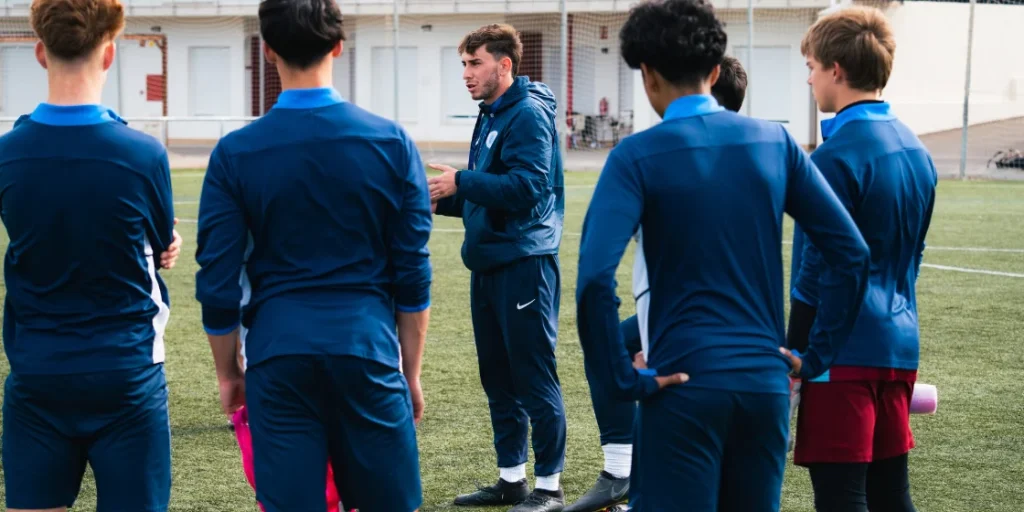
A soccer development academy gives ambitious players the structure they need to train with purpose, compete regularly, and understand what real long-term development requires. The right academy gives young athletes an environment where training, competition, feedback, education, and personal growth work together over time.
For ambitious players, the goal is not only to improve technically. It is to understand the game better, compete with more maturity, adapt to higher standards, and build habits that can support the next step, whether that means college soccer, club opportunities, or a professional pathway.
At IDA Valencia, we see player development as a long-term process. Every player arrives with a different background, level, position, personality, and objective, so the way they integrate into the academy cannot be generic. Players need consistency, professional coaching, honest feedback, competitive minutes, and an environment that challenges them without losing sight of who they are as students, athletes, and young people.
The key is not doing more for the sake of doing more. The key is training and competing with purpose inside an academy environment that helps players grow in a clear, progressive, and realistic way.
What is a soccer development academy?
A development academy is a structured training environment designed to help players improve across the main areas of the game: technical ability, tactical understanding, physical performance, mentality, and lifestyle habits.
Unlike a short camp or occasional training program, an academy focuses on progression over time. Players follow routines, receive coaching feedback, compete regularly, and learn how to manage the demands of a more serious soccer environment.
The wider player development model supported by FIFA also reinforces the importance of training opportunities, qualified coaching, competitive environments, and structured pathways for young players. FIFA’s Training Centre describes talent development as a process connected to training, playing opportunities, and environments that help players keep progressing.
In practical terms, this means that a good academy should not only ask players to work hard. It should help them understand what they are working toward. That is also why the coach-player relationship matters so much: players need clear guidance, but also a setting where they can adapt, make mistakes, and improve with purpose.
At IDA Valencia, that structure takes shape through a full academy environment in Spain, where players train, compete, study, review their performance, and learn how to manage the expectations of a higher-performance setting.
The key pillars of a high-performance soccer development academy
A strong development environment is built through consistency. Training is important, but real progress happens when the player’s daily routine connects technical work, tactical learning, physical preparation, match experience, recovery, and feedback.
This is the logic behind our long-term program in Valencia. Players do not come only to train more; they come to live a full academy routine where development becomes part of the week, not something occasional. The objective is to help each player understand their game better, compete with more maturity, and build habits that can transfer to college or professional environments.
In that context, a high-performance academy should give players more than isolated sessions. It should create a clear framework where every training session, match, analysis meeting, and academic responsibility contributes to the same process: long-term player growth.
Technical and tactical development
Technical work gives players the tools to execute. Tactical development helps them understand how to use those tools with more intention inside the game.
At IDA Valencia, this work is not approached in the same way for every player. Coaches look at the player’s position, current level, decision-making, strengths, and areas for improvement. From there, development becomes more specific through tactical and positional training, small-group sessions, 1-on-1 coaching, video analysis, and continuous evaluation.
The goal is not only to improve individual actions, but to help players connect those actions with the demands of real competition.
Competition and match exposure
Training builds habits, but matches show whether those habits are ready to hold under pressure. A strong academy environment should give players regular competitive opportunities because games reveal details that training alone cannot always show: decision-making, resilience, communication, concentration, and consistency.
In our long-term program, match exposure is part of the development structure. Players compete throughout the season against strong academy and club environments, including fixtures against La Liga club academies and elite European teams. This gives them a clearer understanding of the rhythm, intensity, and standards they need to adapt to.
The value of competition is not only being seen. It is learning how to respond when the game becomes faster, more physical, or more demanding tactically. That is where players begin to understand how their training habits translate into real match situations.
Personal growth and lifestyle
Development is not only about what happens on the field. Players also need to learn how to manage themselves: their routines, recovery, discipline, independence, and attitude when things become difficult.
For international players, this part of the process is especially important. Moving to Spain often means adapting to a new culture, a new rhythm, and sometimes a new language. That adaptation can be challenging at first, but it also helps players grow with more maturity and personal responsibility.
A full academy environment gives players a daily structure that goes beyond isolated training sessions. They learn to live, study, train, recover, and compete inside the same development process. Over time, those habits can become just as important as technical or tactical improvement.
What makes a good soccer development academy?
Not every academy offers the same type of experience. Some focus mainly on training volume. Others prioritize competition, education, exposure, or short-term visibility. The best option depends on the player’s age, current level, goals, and personality.
Before choosing one, it helps to compare the factors that actually influence long-term growth. A strong academy should not only give players more sessions, but connect coaching, competition, feedback, academics, and daily habits into one clear development process.
To make that decision easier, the table below breaks down the areas that matter most when evaluating whether an academy can support real player development over time.
| Key area | Why it matters | What a strong academy should provide |
| Coaching quality | Players need clear guidance, correction, and context | Qualified coaches, individual feedback, tactical detail, and consistent communication |
| Training structure | Progress depends on routine and continuity | Weekly planning, technical work, tactical sessions, physical preparation, and recovery |
| Match exposure | Players need to test their level in real competition | Competitive fixtures, meaningful minutes, and opportunities to apply what they train |
| Player development plan | Every player grows at a different pace | Individual goals, performance tracking, video analysis, and regular evaluation |
| Academic support | Student-athletes need balance on and off the field | Flexible education options and guidance for college or career pathways |
| Environment | Daily habits shape long-term progress | Discipline, responsibility, support, independence, and high standards |
This is why the strongest academies are not defined by one single factor. Facilities, location, and training hours all matter, but they only make a real difference when they are connected to a clear development plan. From there, the next question is when a player is ready to join that kind of environment and how to choose the option that truly fits their goals.
What age is best to join a soccer development academy?
There is no perfect age for every player, because development does not happen at the same rhythm for everyone. Some players are ready for a more structured environment early on, while others need more time to build confidence, maturity, or a clearer idea of where they want to go.
More than age, the key question is readiness. A player should be prepared to train consistently, accept feedback, compete with intensity, and take responsibility for their own development. When those habits are in place, joining a development academy can have a much stronger impact.
For younger players, the focus should still be on building a strong technical base, enjoying the game, developing coordination, and creating positive training habits. As players get older, the process usually becomes more specific. Tactical understanding, physical preparation, match exposure, highlight videos, college recruiting, and professional opportunities start to play a bigger role.
For players who are ready for that kind of step, IDA Valencia offers a player experience program designed for athletes aged 14+ who want to enter a full-time academy setting, follow a structured routine, and understand what higher-level soccer demands on and off the field. It can be a valuable bridge for players preparing for U.S. college soccer, professional environments, or a longer-term academy pathway.
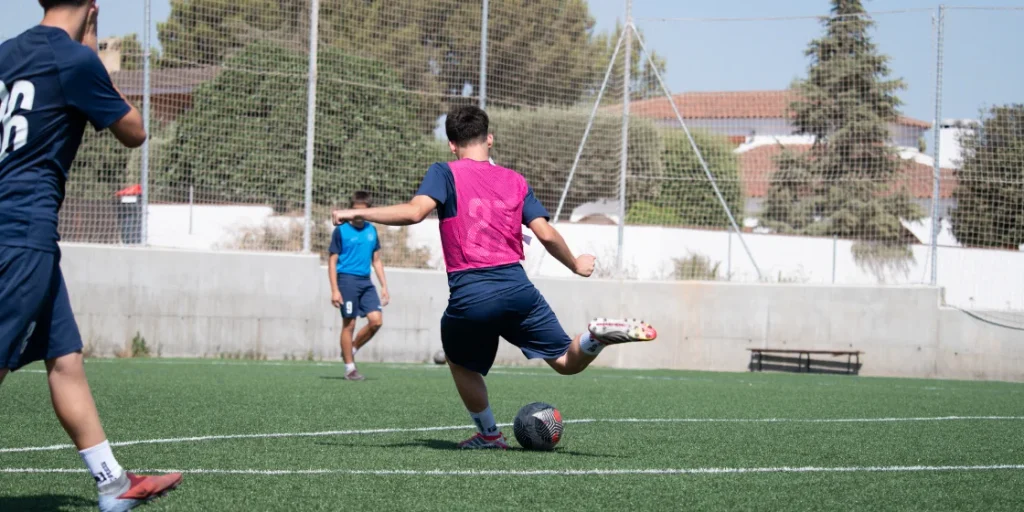
How to choose the best soccer development academy for you
Choosing the right academy starts with an honest question: what does the player actually need at this stage of their development?
Some players need stronger coaching. Others need more competitive matches, a clearer routine, international exposure, academic support, or guidance toward college or professional opportunities. The best option is not always the biggest name or the most intense program. It is the environment that fits the player’s current level, goals, personality, and readiness to grow.
That is why it is important to look beyond the surface. A player should understand what daily life inside the academy really looks like. Regular training, match exposure, video analysis, individual feedback, academic planning, recovery habits, and a serious but supportive environment all matter when choosing where to develop.
The right academy should not force every player into the same pathway. Some players may be preparing for U.S. college soccer, while others may be looking for a professional environment, trial opportunities, or simply a more demanding place to keep improving. What matters is that the structure helps each player move forward with clarity.
For international players, location also plays an important role. Training in Spain gives players the chance to experience a different soccer culture, adapt to the European game, and compete in an environment where the daily standard becomes part of the learning process. At IDA Valencia, that international context is part of what helps players understand not only how to train, but how to adapt, compete, and grow with more independence.
Ultimately, choosing the right academy is about fit. When the environment matches the player’s needs, level, and long-term goals, development becomes more focused, more consistent, and easier to sustain over time.
IDA Valencia: international youth soccer development academy
The difference at IDA Valencia is in the day-to-day experience. Players develop in an environment where soccer, academics, personal responsibility, and adaptation to life in Spain are all connected.
For many international players, that combination becomes an important part of their growth. Living in Valencia means adapting to a new rhythm, competing in a European soccer culture, and learning to take more responsibility for their own development.
Our International soccer academy in Valencia is built for players who need that kind of consistent environment, but also for players who need a personalized integration process. Every player arrives with different habits, expectations, and goals, so the first step is helping
them understand the academy rhythm, the training demands, and the standards of the environment.
Over the years, IDA players have taken different next steps, including college placements and opportunities with clubs such as Villarreal CF and CD Castellón.
That is the value of a true development academy: it gives committed players a serious environment to grow, adapt, and make better decisions about what comes next.
What does a soccer development academy do?
A soccer development academy helps players improve through structured training, competitive matches, coaching feedback, tactical education, physical preparation, and long-term development planning.
Is a soccer development academy only for elite players?
Not always. Some academies are built only for elite-level athletes, while others support motivated players at different stages. The key is choosing a program that matches the player’s level, goals, and readiness.
Can a soccer development academy help with college soccer?
Yes, if the academy has a clear college pathway. At IDA Valencia, players can receive support with academic eligibility, highlight videos, recruitment guidance, and connections with college coaches.
How is a long-term academy different from a short camp?
A short camp can be useful for exposure or a first experience, but a long-term academy gives players more time to build habits, compete regularly, receive feedback, and track their development over a full season.
Can an academy guarantee a professional contract?
No. A serious soccer development academy should not guarantee a professional contract. It can provide training, match exposure, feedback, and opportunities, but each player’s outcome depends on level, progress, timing, and performance.