

Learning how to get scouted for soccer is not just about playing one great match in front of the right person. It is about becoming easier to evaluate: consistent, prepared, visible, and able to show your level in competitive environments.
A soccer scout is looking for more than talent. Technical quality matters, but so do decision-making, attitude, tactical understanding, physical capacity, and how a player responds when the game becomes difficult.
The clearest answer to how to get scouted for soccer is this: play regularly in strong environments, perform consistently, build a reliable player profile, use video intelligently, and seek settings where coaches, academies, clubs, or college programs can evaluate you over time.
The key is not simply to be seen. The key is to be ready when you are seen. This guide explains what scouts look for, how players can increase visibility, and why structured development environments can make a major difference.
What are soccer scouts?
Soccer scouts are talent evaluators who observe players for clubs, academies, colleges, agencies, or development programs. Their role is to identify players who may fit a team’s needs now or who have the potential to develop into a higher-level player.
A scout may watch matches live, review video, attend tournaments, follow academy games, or receive recommendations from coaches. In modern football, scouting is increasingly connected to structured player development. FIFA’s talent development resources highlight the importance of qualified talent identification staff, access to technology, and regular opportunities for players to train and compete.
This matters because understanding how to get scouted for soccer starts with understanding how evaluation works. Scouts are rarely judging a player on one isolated action. They are trying to answer a bigger question: can this player adapt, improve, compete, and contribute in the environment we are recruiting for?
How to get scouted for soccer: what scouts are really looking for
The first thing scouts usually notice is technical comfort. A player who receives the ball cleanly, scans before receiving, passes with purpose, protects possession, and executes under pressure stands out quickly.
But technical skill alone is not enough. Scouts also watch how a player behaves without the ball. Do they understand space? Do they recover after losing possession? Do they communicate? Do they keep their concentration when the game becomes physical or chaotic?
That is why how to get scouted for soccer is closely linked to repeatable habits. A single highlight can attract attention, but consistent match behavior creates trust. Scouts want to see whether your level holds across different opponents, game states, and pressure moments.
For players targeting college soccer, the pathway also includes academic and eligibility considerations. The NCAA Eligibility Center explains that college-bound student-athletes, including international students, must meet academic and athletics eligibility requirements before competing at an NCAA school.
The key attributes every scout evaluates in a player
Before trying to increase exposure, players should understand what they are trying to show. The following framework helps connect common scouting criteria with practical actions on the field.
| Attribute | What scouts observe | How to show it consistently |
| Technical quality | First touch, passing, ball control, finishing | Play quickly, stay composed, execute under pressure |
| Tactical intelligence | Positioning, scanning, decision-making | Understand your role, move before receiving, make smart choices |
| Physical profile | Speed, strength, endurance, agility | Compete with intensity and recover well between actions |
| Mentality | Focus, resilience, coachability | Respond well to mistakes, accept feedback, stay engaged |
| Game impact | Influence on the match | Create chances, stop danger, connect play, solve problems |
How to get scouted for soccer through consistent performance
Consistency is one of the strongest signals a young player can give. Scouts and coaches want to know whether a player can repeat good actions, not just produce occasional highlights.
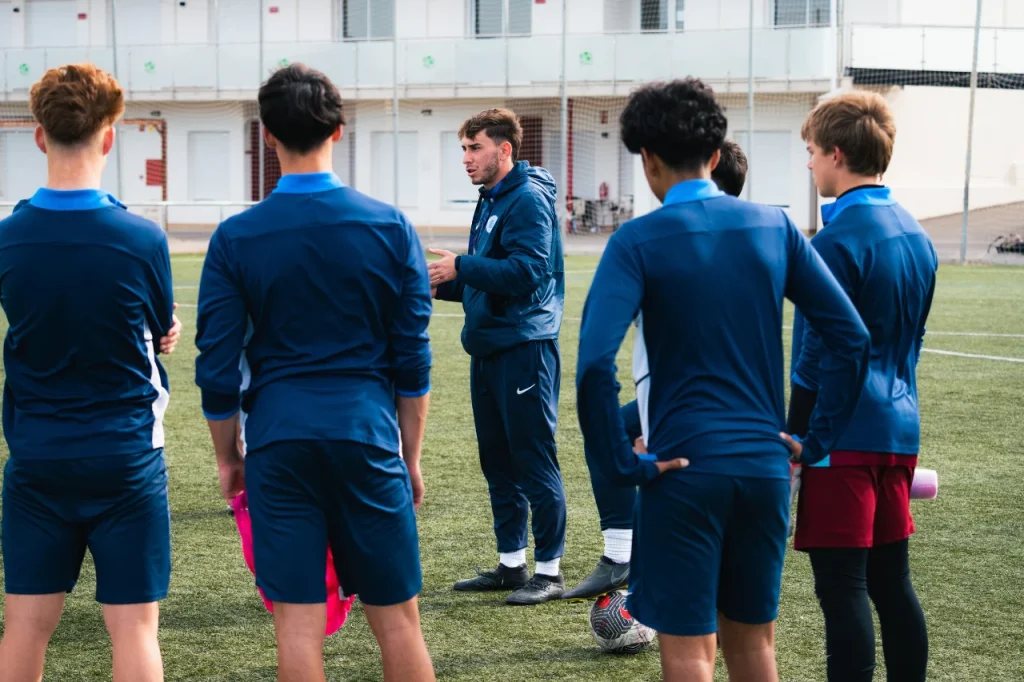
At IDA Valencia, we believe player development comes from daily progression, competitive play, performance work, and long-term consistency. That is why our player experience program is built around regular training, match exposure, and adaptation to a high-performance academy environment, rather than a one-off camp experience.
This is important for any player researching how to get scouted for soccer because scouting depends on evidence. The more competitive minutes you have, the more your performance can be assessed. The more structured your training environment is, the easier it becomes to improve the details that scouts notice.
Playing in the right environments to increase visibility
A major part of how to get scouted for soccer is choosing environments where your level can be evaluated properly. Strong competition gives scouts more context because it shows how you react against players who are fast, organized, physical, and tactically disciplined.
For international players, exposure is not only about being seen by the right people. It is also about training and competing in an environment that helps them understand the standards of the game they want to reach. At IDA, our long-term program is built around a full-time European training model, personalized player development, video analysis, performance tracking, and regular match exposure.
This structure gives players more than visibility. It gives them a clearer picture of their strengths, their areas for improvement, and the level of consistency required to be taken seriously by clubs, academies, or college programs.
The role of soccer development academies in player exposure
Soccer development academies can support players who want to understand how to get scouted for soccer because they connect training, competition, evaluation, and guidance in one structured environment.
For many young players, the challenge is not only getting more exposure. It is knowing whether they are developing in the right direction. A player may have talent, but without regular feedback, competitive minutes, tactical context, and a clear training routine, it becomes harder to show that talent consistently.
That is where a full academy environment makes a difference. Our model is built around daily progression, UEFA-licensed coaching, match experience, video analysis, performance habits, and exposure to an international football context. Players train and compete alongside student-athletes from different countries, which helps them adapt to different styles of play and higher expectations.
This does not guarantee that a player will be scouted. What it does provide is a more complete framework for development: clearer feedback, stronger competition, more consistent evaluation, and a better understanding of what the next level requires.
How to prepare your player profile before contacting clubs
Players often focus on exposure before they are ready to present themselves. A clear profile makes evaluation easier.
- A strong player profile should include:
- Full name
- Age
- Nationality
- Height
- Preferred foot
- Position
- Current club or academy
- Competition level
- Academic status
- Video link
- Contact information
If you are targeting U.S. college soccer, academic information and eligibility awareness are especially important.
Also, your highlight video should be short, clear, and honest. Start with your strongest relevant actions, but include plays that show your real position. A central midfielder should not only show goals. A center back should show defending, aerial duels, distribution, positioning, and recovery actions.
This is one of the most overlooked parts of how to get scouted for soccer: make it easy for someone to understand who you are as a player.
Common mistakes that make players harder to scout
Many players reduce their chances without realizing it because they look for exposure before they are ready to make the most of it. Trials, showcases, and direct messages can create opportunities, but they have limited value if the player has not yet built a consistent level in training and matches.
The same applies to video. A highlight reel can support a player profile, but only when it helps scouts evaluate clearly. Poor angles, clips without player identification, or actions taken only from low-pressure situations make it harder to understand the player’s real level.
Behavior also plays a major role. Scouts pay attention to body language, communication, effort after mistakes, and coachability. A player can be technically strong, but if they react poorly to setbacks or disconnect when the game becomes difficult, it may raise doubts about their readiness.
Understanding how to get scouted for soccer means understanding that everything communicates: your performance, your preparation, your attitude, and your ability to keep improving.
The best way to approach how to get scouted for soccer is to stop thinking only about being discovered and start thinking about becoming easier to evaluate. Scouts look for players who perform consistently, understand the game, compete with maturity, and show growth over time.
For players seeking a structured environment in Spain, IDA Valencia’s international academy and player experience programs offer a pathway built around training, competition, development, and exposure.
If you are serious about taking the next step, start by understanding your current level, identifying what you need to improve, and choosing an environment that challenges you every day.
FAQ about how to get scouted for soccer
How do you get noticed by soccer scouts?
You get noticed by playing consistently in competitive environments, building a clear player profile, sharing quality match footage, and performing well when coaches or scouts are present.
What age do soccer scouts start looking at players?
There is no single age. Some players are identified very young, while others develop later. The most important factor is showing progress, consistency, and readiness for the next level.
Can you get scouted without playing for a big club?
Yes. Playing for a big club can increase visibility, but scouts also find players through tournaments, academies, showcases, referrals, video, and strong performances in competitive matches.
What should I include in a soccer highlight video?
Include your best position-specific actions, clear clips, simple editing, your name and position, and footage that shows decision-making as well as technical ability.
Can a soccer academy help you get scouted?
A soccer academy can help by providing structured training, competitive matches, coaching feedback, video analysis, and exposure opportunities. It cannot guarantee scouting outcomes, but it can improve preparation and visibility.